Automotive exhaust tubing is easy to damage with too much heat, so choosing the best wire size for MIG welding exhaust matters before I touch the trigger. For most mild-steel exhaust systems in the US, especially 16- to 18-gauge tubing, I would start with .023- or .024-inch ER70S-6 solid wire.
The smaller diameter gives better puddle control at lower heat input, reducing the risk of burn-through when the machine and technique are set correctly.
Wire diameter is only part of the setup. Tubing thickness, base metal, shielding gas, joint fit-up, voltage, wire-feed speed, and technique all affect the weld.
What Size MIG Wire Is Best for Exhaust Pipe?
For ordinary mild-steel automotive exhaust, .023 or .024 ER70S-6 is usually the most forgiving choice. Miller recommends .023-inch wire for thinner material because it reduces heat input, while .030 is a versatile general-purpose diameter and .035 is intended for thicker work. Similar to choosing MIG welder settings for 16-gauge steel, wire diameter matters because thinner metal benefits from a setup that gives better control over heat and penetration.
Smaller wire usually gives me more control on thin mufflers, tailpipes, resonators, and repair sections where excess heat can quickly create a hole.
.023 vs .030 vs .035 MIG Wire for Exhaust
| Wire size | Best use | Main consideration |
| .023/.024 inch | Thin 16- to 18-gauge mild-steel tubing | Best heat and puddle control |
| .030 inch | Thicker tubing, aftermarket exhaust, brackets, some heavy-duty or diesel work | Faster deposition but needs tighter heat control |
| .035 inch | Heavier sections, flanges, thicker fabrication | Usually not my first choice for thin exhaust |
I would not call .035 universally unusable on 16-gauge steel. Manufacturer guidance can include .035 for 16-gauge and thicker automotive work. On thin 18-gauge tubing, rusted sections, or joints with gaps, however, .023/.024 is usually more forgiving.
Why ER70S-6 Works Well on Mild-Steel Exhaust
Wire diameter and wire classification are different. The .023, .030, or .035 measurement tells you the diameter; ER70S-6 identifies the filler classification.
ER70S-6 is popular for mild steel because it produces a stable arc and contains deoxidizers that help with minor contamination. I still clean away rust, paint, oil, scale, and exhaust residue before welding because clean metal improves arc stability and weld quality.
For thin mild-steel exhaust repairs, .023/.024 ER70S-6 gives me a practical combination of feedability, puddle control, and lower heat input.
What Shielding Gas Should I Use for Mild-Steel Exhaust?

For gas-shielded MIG welding on carbon steel, 75% argon and 25% CO2, commonly called C25, is a strong starting choice.
Miller recommends this blend for mild steel because it produces relatively low spatter, good bead appearance, and does not encourage burn-through on thinner material.
Straight CO2 offers deeper penetration but typically produces more spatter and a harsher arc. On thin exhaust tubing, I generally prefer the smoother behavior of C25.
Is Solid Wire Better Than Flux-Core for Exhaust?
For thin automotive exhaust tubing, I prefer solid wire with shielding gas. Flux-core can be useful outdoors where wind makes shielding gas difficult to maintain, but it generally introduces more heat, spatter, and slag.
Miller specifically advises against using flux-cored wire on very thin sheet metal because of the additional heat it puts into the base material.
For clean thin-wall exhaust joints, solid ER70S-6 usually gives me better control.
What Wire Should I Use for Stainless-Steel Exhaust?
Stainless exhaust requires a different filler strategy. Many aftermarket exhaust systems use 304 stainless, while 409 stainless is also found in automotive exhaust applications.
For 304 stainless, ER308, ER308L, or ER308LSi are common compatible filler choices. Lincoln Electric lists ER309/309L for dissimilar applications such as joining mild steel to stainless steel.
Stainless MIG procedures may also call for a tri-mix or another manufacturer-specified shielding gas. Miller, for example, recommends a helium/argon/CO2 tri-mix for MIG welding 304 stainless sheet.
I identify the base metal before selecting wire because the correct diameter cannot compensate for an unsuitable filler alloy.
How Do I Prevent Burn-Through on Exhaust Pipe?
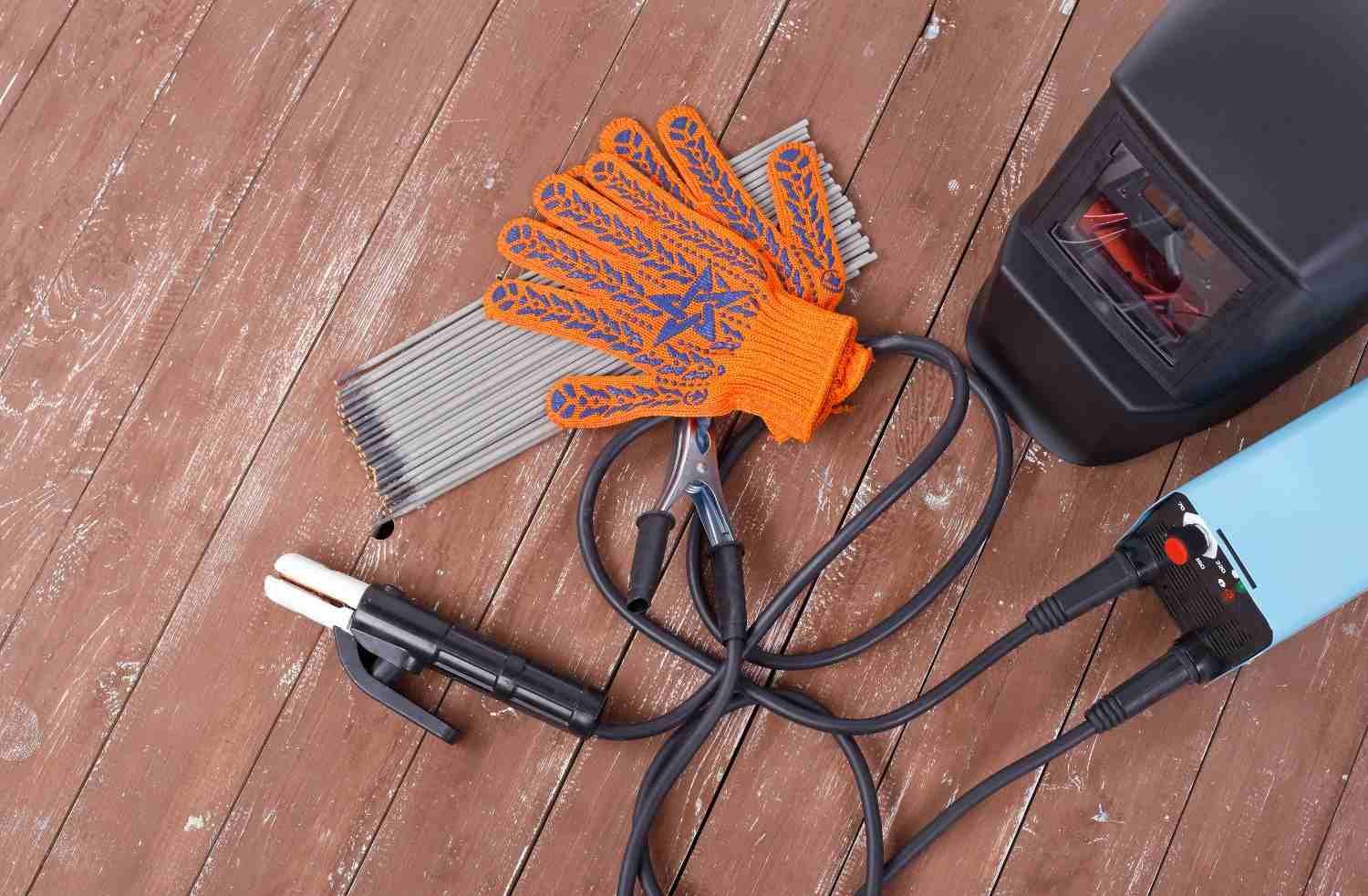
Wire choice helps, but technique matters just as much. I avoid running one continuous bead around thin exhaust tubing. Instead, I use short tacks or stitches, often around 1/4 to 1/2 inch, then move to another area so the metal can cool.
Fit-up matters too. A large gap forces you to bridge open space with molten filler, increasing the chance of blowing away the edge. I keep the joint tight, clean both surfaces, and test settings on scrap tubing of similar thickness.
I also start with the voltage and wire-feed recommendations supplied by the welder manufacturer. Machines behave differently, so copying another person’s exact settings is less reliable than starting with the machine chart and fine-tuning on scrap.
Miller likewise recommends considering metal thickness, wire diameter, joint configuration, shielding gas, and welding position when establishing parameters.
Should I Weld or Replace Rusted Exhaust Tubing?
A localized crack or small hole in otherwise solid tubing may be worth welding. If the surrounding metal flakes, crumbles, or has become paper-thin, welding can simply create new holes beside the repair. While processes like submerged arc welding are commonly used for thicker materials and industrial applications, they are generally not practical for repairing thin automotive exhaust tubing because of the heat input and equipment requirements.
In that situation, cutting out the damaged section and replacing it with sound tubing is usually more durable than repeatedly patching weakened steel.
Frequently Asked Questions (FAQs)
1. What is the best wire size for MIG welding exhaust on 18-gauge tubing?
For 18-gauge mild-steel exhaust, I would generally choose .023- or .024-inch ER70S-6 solid wire. It offers good heat control and makes short tack or stitch welding easier.
2. Can I Use .030 MIG Wire on Exhaust Pipe?
Yes. .030 wire can work well on somewhat thicker tubing, aftermarket systems, brackets, and heavier exhaust sections. On very thin metal, keep weld duration short and control heat carefully.
3. Is .035 MIG Wire Too Big for Exhaust?
It can be too aggressive for thin 18-gauge tubing or badly corroded sections, but it can be suitable for thicker material when your machine supports it, and the settings match the job.
4. What MIG Settings Should I Use for Exhaust Tubing?
Start with the settings chart supplied with your welder for the wire size and material thickness. Test on matching scrap and adjust voltage and wire-feed speed until the arc is stable without excessive burn-through.
Final Thoughts
For most US mild-steel automotive exhaust repairs, .023/.024 ER70S-6 solid wire paired with C25 shielding gas is my preferred starting setup. .030 wire is a useful alternative for somewhat thicker tubing, while .035 is better suited to heavier sections than delicate thin-wall repairs.
The strongest results come from matching the filler to the actual metal, preparing a tight and clean joint, following manufacturer settings, and controlling heat with short welds rather than chasing one universal setting.